Employees in most industries encounter and utilize various computer technologies and systems tailored to an infinite number of applications and tasks. Natural Language Processing (NLP) encompasses all activities in which computers decipher, analyze, and respond to human language to write and speak with people. NLP systems are embedded in applications that daily users across industries use for automated translations, sentiment analysis, responses to specific queries, and calls. NLP enables technology interactions for researchers, users, and customers. Anyone involved in artificial intelligence, data science, and digital innovation needs to know the applications and significance of NLP.
What Is Natural Language Processing?
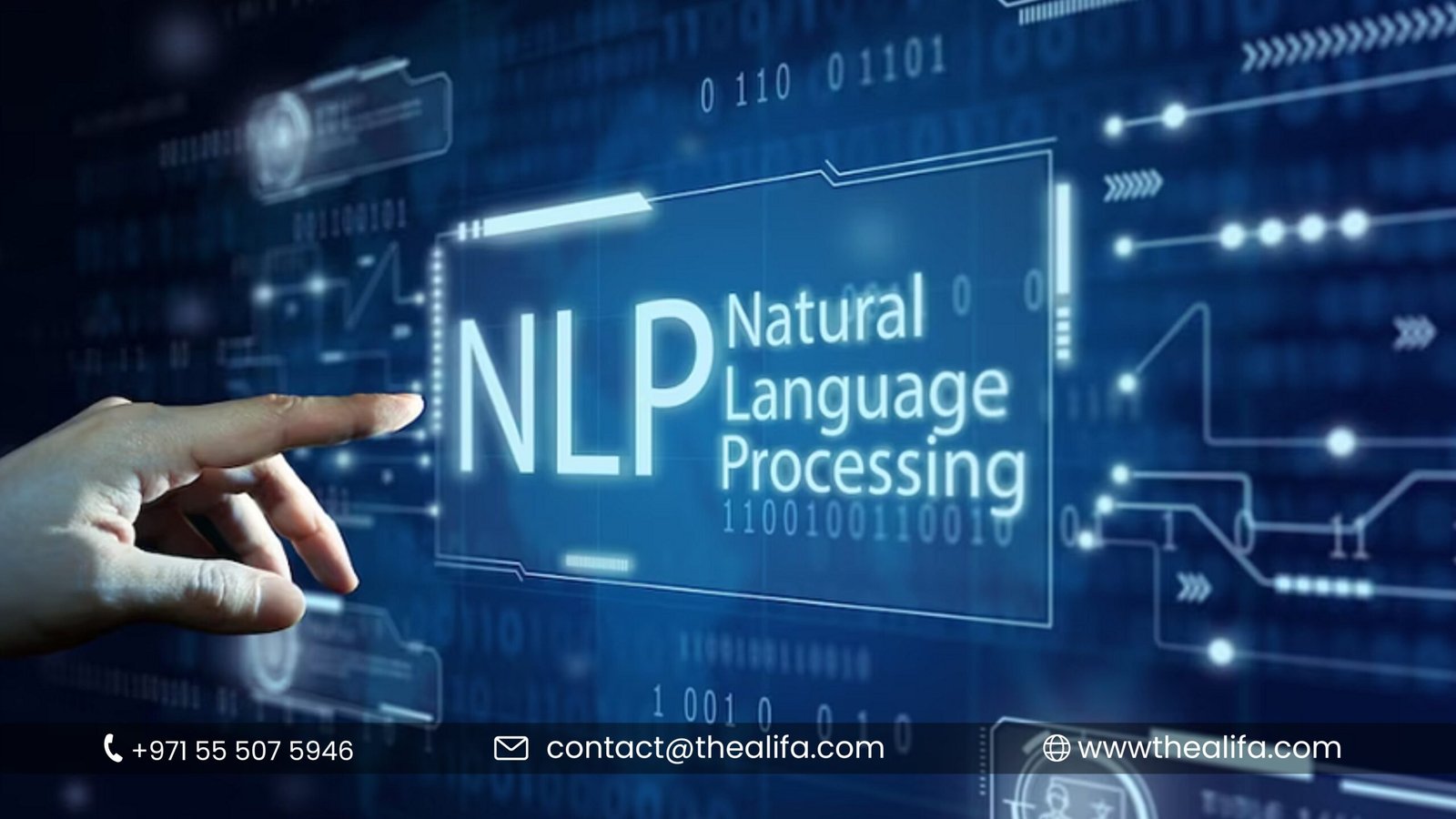
Natural Language Processing (NLP) concerns itself with the intersection of computers and human language, making it a subset of artificial intelligence (AI). Simply put, it is the ability of a computer to read, understand, and generate human language in a useful and meaningful way.
Structured data in the form of text or speech is unprocessed when it is generated by a computer. Using tools from computer science, linguistics, and machine learning, vast troves of data are analyzed and ultimately formatted for machine reading. Possible outputs of NLP are the following:
- Text classification (identifying topics or classifying messages as spam).
- Identification of sentiment ( reviewing social media to determine an overall sentiment)
- Machine translation (Google Translate or chatbots that support multiple languages)
- Speech to text ( cloud assistants, Siri, and Alexa)
Customer service automation through chatbots.
Having identified the NLP meaning (as opposed to merely identifying it), one understands how central this technology is to a wide range of contemporary applications. NLP is driven by AI and instrumental in simplifying communication with computers.
Why NLP Is Important
NLP is more than just a technical tool it has wide-ranging implications for business, technology, and society. Here’s why it’s so important:
Enhancing Communication Between Humans and Machines
In the past, computer engagement required knowledge of specific tools and related programming languages, commands, or system formulations. Natural Language Processing (NLP), however, helps solve the problem and enables people to have everyday conversations with computers. This solution benefits users who prefer to communicate with technology, such as voice-activated systems on smart devices (Amazon Alexa, Google Assistant, etc.). These devices understand and respond to commands such as “Play my favorite playlist” and “What is the weather today?” without any technical or programming knowledge on the users’ part.
Automating Business Processes
All companies are engrossed in analyzing varying types of text data emails, customer reviews, support tickets, and social media posts. It is essential to apply NLP to automate insights, analyze, and streamline processes. Sentiment analysis, for example, is a useful tool for determining customer satisfaction and trends and, when paired with a chatbot, can automate the resolution of common customer requests. This allows human workers to devote more attention to value-adding complicated activities.
Improving Decision-Making
Through NLP, businesses gain a data-driven understanding of language, identify patterns, and act on them. Companies can pre-empt and satisfy market needs, enhance products, and refine processes by analyzing client feedback and scanning social media. NLP helps transform raw text into organized, usable data.
Enabling Advanced AI Applications
Advanced AI technologies such as machine translation, text summarization, and conversational AI all rely on natural language processing (NLP). In our fast-paced, universally digital world, these technologies improve user interactions by offering instant, contextual, and accurate services, whether in translation or in service recommendations.
Core Components of NLP
To accurately capture what NLP means, let’s delve into its components.
Splitting text into more manageable parts, for example, words or phrases, is called tokenization.
Identifying the function a given word serves in a sentence is known as part-of-speech tagging.
Named Entity Recognition, or NER, is the process of identifying and categorizing names, including people, places, and organizations.
Sentiment analysis is the action of identifying whether a text is emotively charged, for example, positive, negative, or neutral.
Syntax and parsing are the analysis of the arrangement of words in a sentence.
Together, these components enable machines to interpret and process human language effectively, making NLP a powerful tool for understanding text.
Real-World Applications of NLP
NLP applications are prevalent everywhere today, even if you don’t realize it. Some major applications are:
- Chatbots and Virtual Assistants: Automation of customer service and personal assistants like Siri, Alexa, and Google Assistant.
- Machine Translation: Tools like Google Translate and DeepL help bridge the gap between different languages.
- Healthcare: Analyzing medical records, clinical notes, and patient feedback helps improve service delivery.
- Finance: Analyzing customer feedback, report generation, and detecting fraud in the system.
Furthermore, Social Media Analysis leverages NLP to monitor public sentiment trends and manage brand reputation on platforms such as Twitter and Instagram.
These applications demonstrate how NLP enables industries to derive valuable, actionable insights from unstructured language data.
Challenges in NLP
The resulting issues include misunderstandings and misinterpretations of machine intelligence systems.
Native-language ambiguity: Words may have two or more meanings depending on the context in which they are used. Take the example of the word “bank”: It can refer to a financial institution or to a bank of a river.
Sarcasm and irony: Logic that is programmed into computers is unable to decipher the subtlety and the complexities that arise in the expression of human ideas.
The diversity of data: The varied use of language, slang, and dialects contributes to the problems faced.
Computationally data-driven: The algorithms and processes of Natural Language Processing depend not only on large data sets, but also on high calculations and processes that carry information.
The challenge is the focus of current research and development. NLP sits at the boundary of artificial intelligence and logic.
FAQs
What does NLP stand for?
NLP refers to Natural Language Processing. As a subsection of AI, it is primarily concerned with how computers understand, analyze, and generate human language.
NLP in routine life?
NLP powers the functionality of virtual assistants, AI chatbots, translation services, spell and grammar checkers, and social media apps that analyze the emotional tone of user content.
Why is NLP necessary for companies?
It is essential for automating activities, analyzing customer reviews and feedback, optimizing decision-making processes, and improving the customer journey.
Is NLP difficult to learn for a novice?
Completely false. From numerous online courses and how-to articles, and with the help of programming languages such as Python, there are libraries tailored for beginners to learn NLP, such as NLTK and spaCy.
5. What are the biggest obstacles to NLP?
Unclear phrasing, the use of irony and subtlety, the use of regional language variants, the absence of databases, and the need for large corpora are the key challenges of NLP.
Conclusion
Natural Language Processing (NLP) is revolutionizing how humans interact with machines, offering countless applications across business, healthcare, finance, and more. Understanding NLP meaning is crucial for anyone involved in technology, AI, or data analytics. From automating tasks to enabling advanced AI applications, NLP is a critical tool in today’s digital world. By embracing NLP, organizations and individuals can harness the power of language data to improve efficiency, decision-making, and innovation.
Explore NLP today, experiment with tools like chatbots or sentiment analysis, and unlock the full potential of human-computer communication.