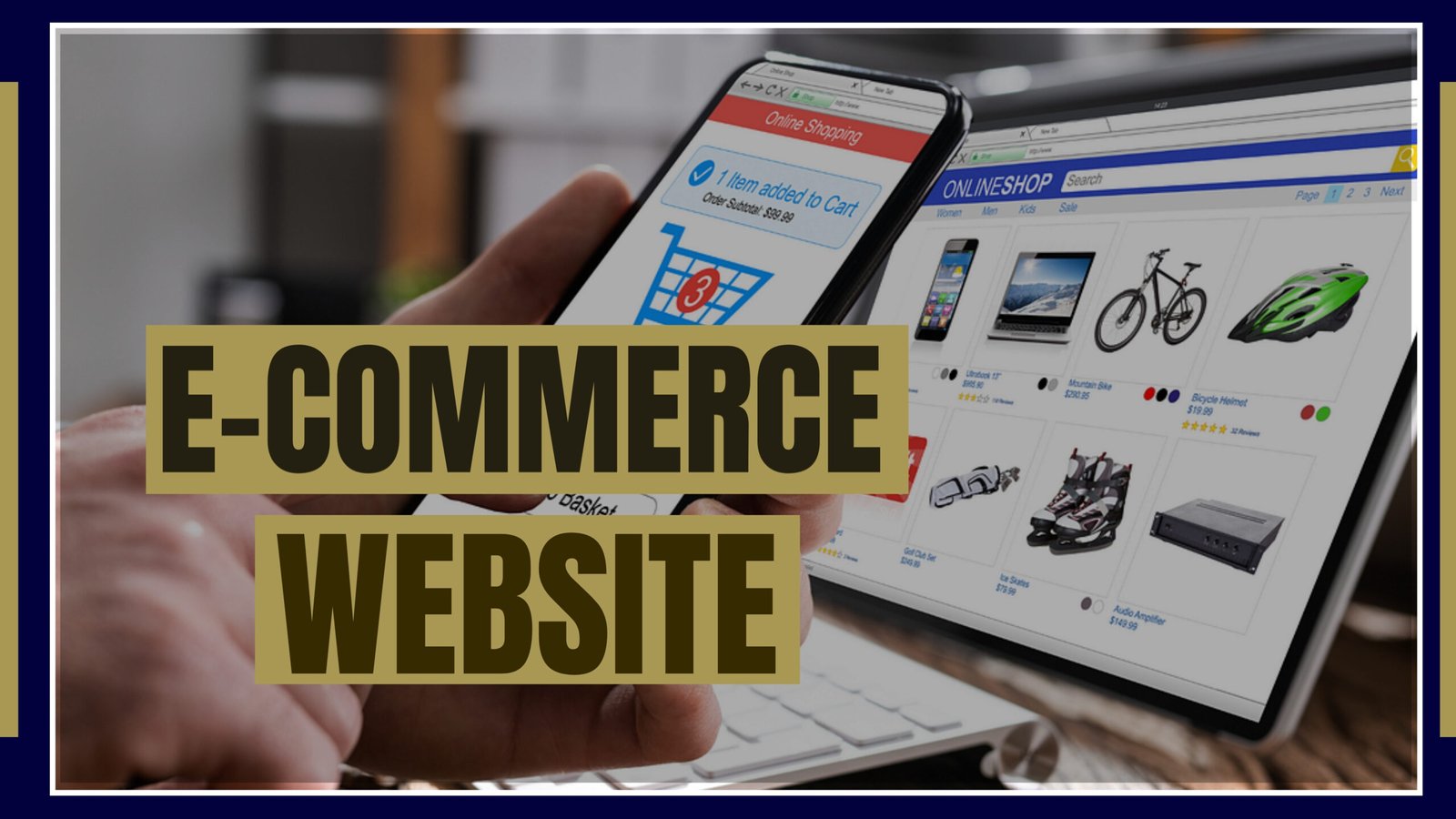
Your website store is an e-commerce site where people buy and pay online. With the growth of online shopping, your business big or small must have an E-Commerce website today.
Types of E-Commerce Websites
B2B (Business-to-Business)
The aim of B2B sites is business-to-business commercial intercourse, such as a textile firm that sells fabrics in bulk online to a clothing maker, for example. They simplify wholesale purchases, usually with additional bonuses such as bulk pricing and inventory management equipment.
B2C (Business-to-Consumer)
That’s the model most of us are familiar with think Daraz, or Amazon, or Shein. A B2C e-Commerce site connects businesses to consumers. Users can navigate product categories, add products to the cart and make secure payments.
C2C (Consumer-to-Consumer)
OLX, eBay and Facebook Marketplace are marketplaces in which people sell to other people. This is perfect for secondhand items, homemade products or collectable items.
D2C (Direct-to-Consumer)
Brands are making their own digital stores to sell customers directly, cutting middlemen. Ideal for startups that want full control over pricing, customer data and branding.
Quality of a Good E-Commerce Site
User-Friendly Interface
Customers can easily find what they are seeing, as the site is taken away. Clear product categories, search filters and customer reviews that build trust.
Secure Checkout Process
Security matters. Added SSL Certification, secure servers (PayPal, Stripe), and encrypted data buffers to your security data so you can be sure that all of your sensitive information is safe when shopping.
Mobile-Friendly Design
Most e-commerce is done over the phone. Mobile responsiveness guarantees that your e(c)ommerce is accessible and usable on all devices.
Product Listings with Details
High-quality images in bright, rich colours bring customers in; descriptions and bullet points tell customers why the product is special. Some customers like things like size charts or “compare prices.” These help improve usability.
Fast Loading Speed
And if a web page is too slow, customers leave. We need to find the right speed (not a great image of professionalism) between running a program quickly and getting a good SEO rank.
Order Tracking & Easy Returns
These are initiatives that contribute to a happy customer and result in brand loyalty, transcending the ability to track an order or make seamless returns, all the way up to connecting at any time with 24/7 customer support.
The Struggles of Running an E-Shop
High Competition
With a sea of other online shops, it takes some SEO optimisation along with targeted advertising and customer engagement, like a loyalty program.
Cart Abandonment
Some carriers are abandoning carts. E-commerce email marketing and abandoned cart recovery strategies are all about driving customers back.
Logistics & Shipping
It is also about consumers and couriers that cannot stay away from home for one more moment, storytelling in luxury watches, people getting forced to buy now, or they might never have money again, and lousy courier services ruining your brand. Reliable logistics partners are essential.
Cybersecurity Concerns
Fraud and hacking are very real risks in e-commerce. Platforms like Shopify provide SSL certification and secure payment integrations, but store owners must still ensure proper security measures to protect customer data.
Customer Retention
It’s one thing to attract customers yet another to keep them. Loyalty points, personalised recommendations, and exclusive deals induce retention through repeat buying.
Top Platforms to Make an Online Store
Shopify
Beginners welcome: Shopify offers templates, payment and analysis tools. That makes it great for small and medium-sized businesses.
WooCommerce
It’s a WordPress plugin, and WooCommerce is very flexible and configurable. It’s cheap, but there is a little bit of technical knowledge required.
Magento
High volume product stores, upper market stores are to be applied. It also has multi-currency and intricate stock management.
BigCommerce
Perfect for scaling businesses. It’s got SEO, transactions and responsive baked into it.
How to Drive Traffic and Sales to an E-Commerce Website
SEO Optimization
Whether you are creating product descriptions or blogs, the SEO will handle your organic traffic. Naturally integrate semantic keywords, like “online shopping,” “buy online”, and a “digital storefront”, throughout the website.
Social Media Marketing
And there are a couple of major platforms that are very effective for product demonstration: Facebook, Instagram and TikTok. Active selling on social media, influencer marketing can increase reach.
Email Marketing
Start a list for deals and discounts, and reminders. Lost sales can be recovered with abandoned cart emails.
Paid Ads & Targeting
Google Ads, Facebook Ads and targeted campaigns bring speedy results.” Upsell and cross-sells. These will increase the value of an order.
Customer Engagement Tools
Offer chat support, loyalty programs and personalised recommendations. This isn’t just good business when it comes to sales, but also enhances the customer experience.
FAQs
What is the use of an E-Commerce website?
It allows companies to sell products and services online, with a secure checkout, product listings and delivery options.
What are the costs to build an e-commerce site?
You can pay as little as $300 right through to a few thousand for complicated customisation.
Can small businesses run an e-commerce website?
Along with platforms such as Shopify and WooCommerce, even small businesses can install cheap online shops.
How do I draw buyers to my online store?
Use SEO, social media advertisements, discount codes and email marketing to drive traffic and sales.
Is a mobile-friendly design really important?
Absolutely. And if your potential customers will have to scroll to view your products or read the text, forget about making a sale and since most of us are shopping on our phones these days, having a responsive design is essential for the success of sales.
Conclusion
Today, an e-commerce website isn’t optional it’s quite literally the lifeblood of business. Also, don’t forget about the 24-hour-a-day, 7-day-per-week online store that you are able to set up with a low cost of doing business, and you can now do business globally! Whatever you’re selling, whether clothes or craft items for craft shows, it will facilitate growth and exposure if you invest in an e-commerce site.