This guide is designed to help you create a digital marketing strategy to increase traffic, increase brand awareness, and improve conversions with analytics-operated strategies.
Step 1: Set appropriate goals and objectives
Apparent marketing strategies require accuracy with average purposes. The goal must be smart: specific, achievable, obtainable, relevant, and periodically.
Examples include raising website traffic by 25% in 6 months or gaining 200 leads monthly—clear objectives help streamline efforts and tracking.
Step 2: Determine the audience
To create a marketing message, an intensive understanding of the audience is necessary. Development of demographics such as age, job, income, as well as interests, pain points, and purchasing behavior should develop personality.
Useful data can be collected through analytics, surveys, and social media. When the voice, tone, and material are adapted to match the audience, the engagement and conversion rates improve.
Step 3: Choose an appropriate digital channel
There is no one-size-fits-all channel for every business. A well-balanced strategy often involves:
- SEO to increase organic visibility.
- Through audience education and trust-building content marketing.
- Brand engagement through social media marketing.
- Achieving immediate results through PPC.
- Lead nurturing through email.
- The busyness of the audience helps in achieving resource efficiency and ROI.
Step 4: Create quality material and update regularly
Digital marketing thrives on quality content—blogs, videos, infographics, podcasts, and social posts that educate and attract the target audience.
Use SEO to improve visibility. To preserve relevance, a material calendar is an effective way to make a forward plan and an outline.
Step 5: Track, Analysis, Adaptation, and Report
No matter how good the digital marketing strategy is, it needs to be modified. Track, measure, and analyze data on engagement, traffic, conversion, and ROI with Google Analytics, Semrush, and Social Media Insights.
Also, improve strategy in areas that are not performing well. Each marketing place can be obtained through continuous improvement and ongoing adaptation.
Why is the audience’s research important in developing a digital marketing strategy?
An effective marketing strategy starts with audience research, identifying demographics, preferences, and motivators to avoid wasted efforts.
If research shows your audience engages with content on Instagram, audience research confirms where to focus. Through audience analysis, the value and emotional appeal of marketing offers and messages can be enhanced.
This builds emotional connections, boosts loyalty, and increases engagement, while audience research enhances strategy precision.
What role does SEO play in digital marketing strategy?

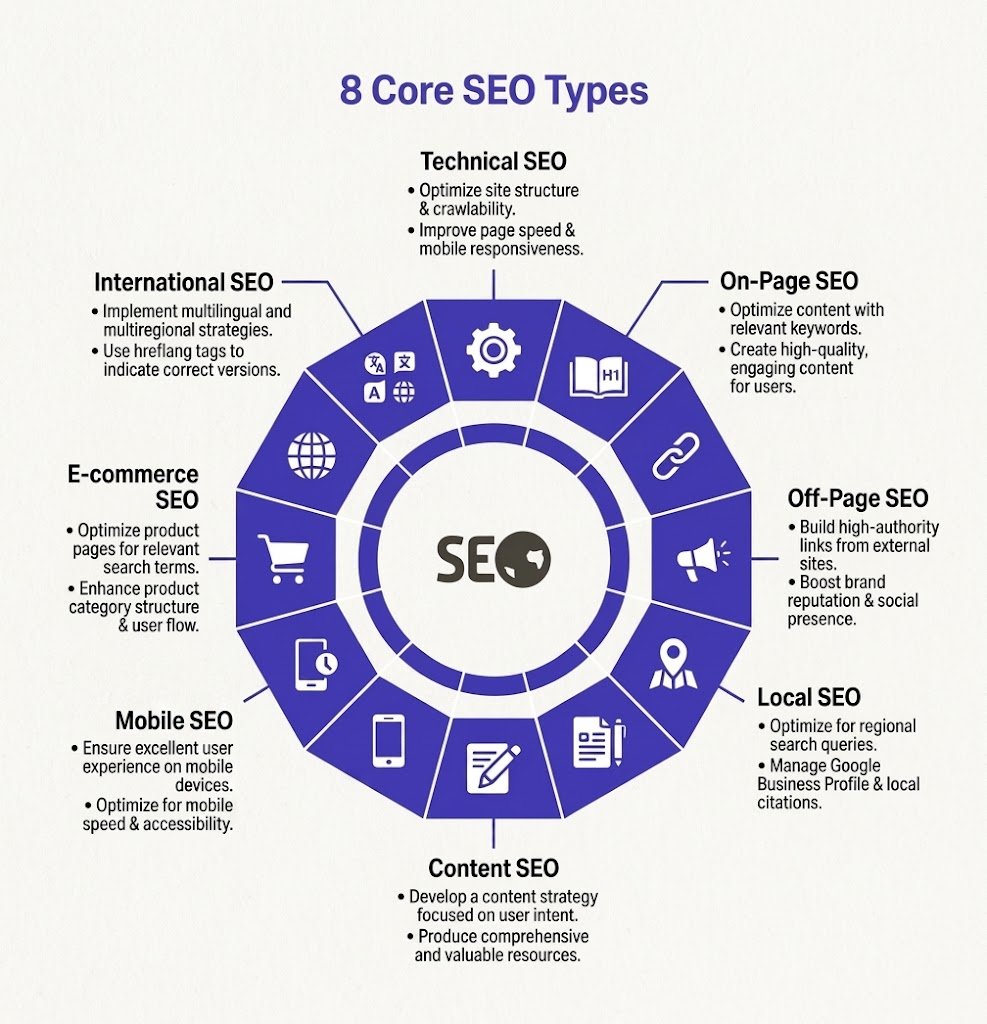
The SEO focuses on improving the status of the website on a search engine. SEO’s impact on digital marketing strategy is tremendous due to organic traffic acquired without paying for advertisements.
The possibility of relevant discoveries is maximum, with the title, meta details, and even on-page and off-page elements such as backlink, with an appropriate keyword strategy. Improved search rankings also enhance the perceptions of the people regarding the company, which makes them more willing to trust the brand.
In addition, the practice of SEO supports other marketing activities like Content Marketing, which need keyword ranking and social media that can drive traffic to SEO optimized pages. Strong SEO enhances long-term visibility.
What are the indicators of the successful implementation of a business strategy?
In conjunction with the scope of the business strategy, the prerequisites for success should also be outlined, as well as relevant KPIs to ensure the monitoring of critical success indicators.
Track the sign-up and email membership for the form goals, and measure the rate of impression, access and engagement for branding and advertising.
Additional data may be fetched from Google Analytics, Facebook Insights, and even some CRM systems. Most importantly, conversion tracking is critical as this will pinpoint the highest ROI channels.
Automated reports reveal strategy strengths and weaknesses, highlighting areas for quick fixes and budget or campaign optimizations. Tracking ROI and evaluating KPIs is key to spotting needed adjustments and measuring a strategy’s success.
How significant is content marketing in relation to a digital strategy?

From building relationships to establishing trust and authority, content marketing makes a vital contribution to any digital strategy. As we have noted, marketing is more effective when it offers value in the form of content, rather than resorting to unabashed selling.
A business is able to consider itself an authority when it posts a blog with tips, offers a tutorial, or publishes an industry report. Content marketing boosts SEO and works across channels—a single report can spark blogs, infographics, and videos.
As we have noted, trust is espoused by high-quality content that inspires, educates, and entertains the audience, fosters loyalty, and increases sales.
FAQ’s
What is a digital marketing strategy?
A digital strategy is defined as an outline that states business goals and the steps required to complete them, incorporating all online channels.
How frequently should a strategy be updated?
The authors recommend a quarterly review in addition to one more in response to significant shifts in the market.
Is paid advertising a must?
Not in every scenario, but in some, paid advertising may expedite the achievement of desired outcomes and broaden network visibility.
How long until results are realized?
Organic results may take 3 to 6 months, while the advertisements paid usually show faster results.
Do small businesses benefit from digital marketing?
Indeed. Consistency in execution and targeting drives results.
Conclusion
A well-constructed and successful digital marketing plan requires thorough research, goal-defined strategizing, and execution.
Mastery of the audience, channel, and content attains success, and in the long run, tracking and optimizing efforts ensure sustained success.
In today’s world, strategic marketing distinguishes a business that merely survives from one that truly thrives.